
The University of California (UC) application system also opened on August 1st. The UC application system is a unified online application platform applicable to all nine UC campuses that offer undergraduate admissions .
-
University of California, Berkeley
-
University of California, Los Angeles (UCLA)
-
University of California, San Diego (UCSD)
-
University of California, Santa Barbara (UCSB)
-
University of California, Irvine (UCI)
-
University of California, Davis (UC Davis)
-
University of California, Santa Cruz (UCSC)
-
University of California, Riverside (UCR)
-
University of California, Merced (UC Merced)
The entire application is mainly divided into the following sections:


-
Personal Information : This includes basic identity, contact information, family background, language proficiency, citizenship or immigration status, etc.
-
Campuses & Majors : You can apply to multiple campuses at the same time and choose the majors you are interested in for each school.
-
Academic History : Complete all courses and grades taken during your four years of high school, as well as any Advanced Placement (AP/IB/Community College) courses.
-
Test Scores : After applying, you can submit SAT, ACT (currently UC does not consider SAT or ACT scores, but they are used for class placement after admission), language test scores (such as TOEFL/IELTS), or AP, IB scores, etc.
-
Activities & Awards : List extracurricular activities, volunteer experiences, internships, competitions, and awards received.
-
Scholarships & Support Programs : Do not affect admission, but help your future.
-
Personal Insight Questions : Applicants must choose 4 questions from 8 options, with a maximum of 350 words per question, to demonstrate their personality, experience, and potential.
Hillhouse will analyze how each section is scored by admissions officers based on the official University of California admissions guide. The University of California uses a holistic review system, which centers on thirteen admission criteria :

-
Grade Point Average (GPA) of AG courses : A student’s academic performance in meeting the basic UC course requirements (AG subjects).
-
Number, content, and performance of AG courses exceeding the minimum requirements : Students' efforts and results in terms of the number and challenge of courses they take that exceed the basic requirements.
-
The number and academic performance of UC-approved honors and AP courses : including whether students have taken UC-approved honors or AP courses and how well they have performed.
-
Eligibility for Local Admissions Program (ELC) : Students from California high schools who are in the top 9% of their class may be eligible for additional admissions opportunities.
-
The quality of courses in the senior year of high school : whether to continue taking challenging courses in the senior year, rather than "finishing off easily".
-
Quality of academic performance within available educational resources : Admissions officers will assess whether students have made full use of the curriculum resources offered by the school or community.
-
Outstanding performance in one or more disciplines : such as exceptional ability or achievement in specific subjects like mathematics, science, or languages.
-
Outstanding performance in special projects : such as scientific research, creative writing projects, design competitions and other non-traditional assessments.
-
Recent improvement trend in academic performance : Even if the early grades are average, significant progress can be recognized later.
-
Special talents, achievements, awards, or skills : including leadership potential, meaningful experiences, demonstrations of talent, and other signs of positive contributions to the university community.
-
Completion of special projects, activities, or plans : such as participation in advanced placement programs, community programs, long-term research, or public welfare projects.
-
Academic achievements should be combined with personal experiences and special circumstances , including but not limited to physical disabilities, low-income backgrounds, first-generation college students, workload, vulnerable environments, family difficulties, refugee or veteran status, etc.
-
The geographical location of the secondary school attended and the place of residence : Differences in regional resources can affect learning opportunities, so admissions officers will take into account the student's school and community environment.
1. Personal Information
This section is similar to the "preface" of a book. By filling in personal information, family situation, citizenship, parents' education level, language background, etc., it helps admissions officers understand your upbringing and personal background.
Admissions officers focus on the following:
Do you come from a low-income or first-generation college student family?
Did you grow up in a special environment (such as foster care, immigration, language barriers, etc.)?
How do these factors affect your educational opportunities and personal development?
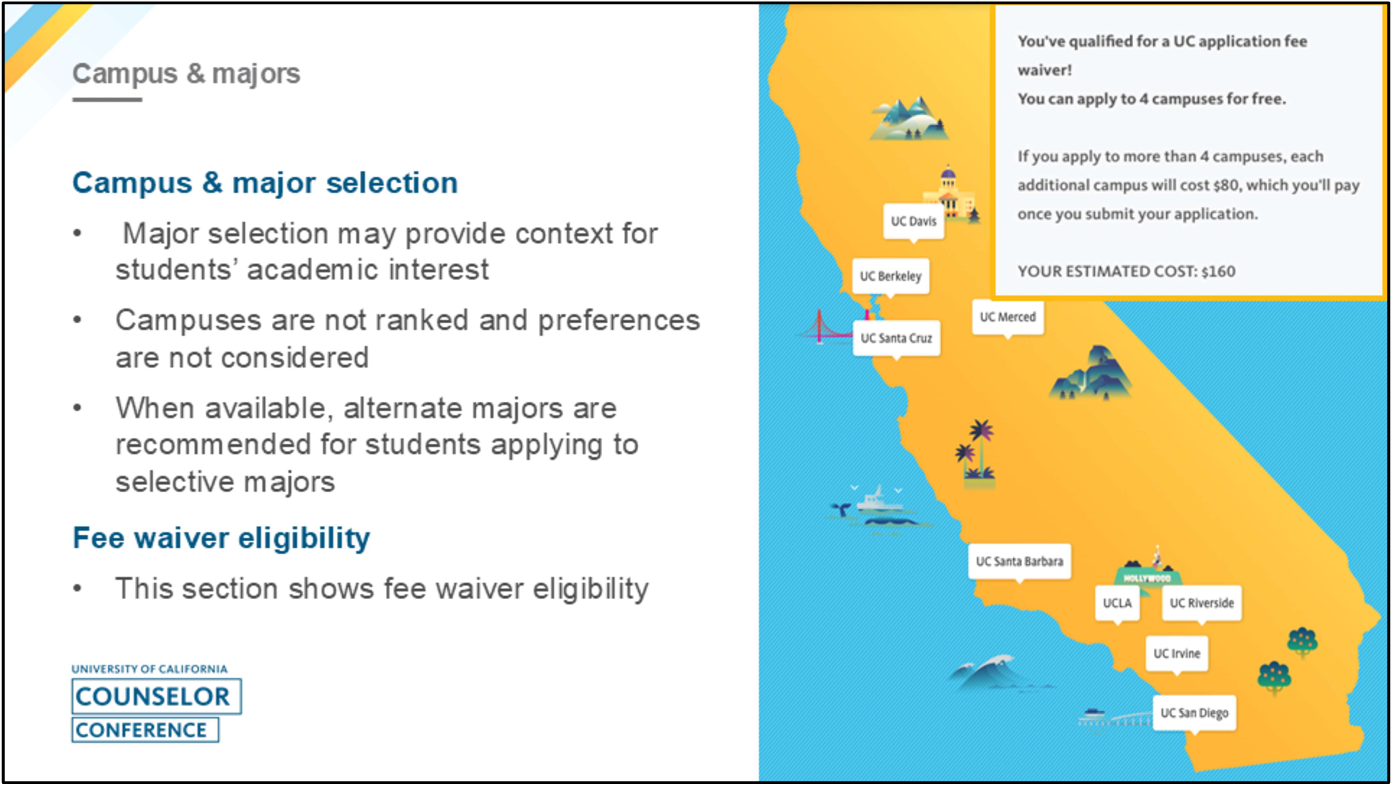
2. Choosing a school and major
When applying to UC, you can apply to multiple campuses and choose corresponding majors. Some majors (such as Computer Science and Biological Sciences) are highly competitive, so it is recommended to fill in alternative majors (Note: UCLA does not allow alternative majors).
Admissions officers focus on the following:
Does your choice of major align with your past learning and activity experiences?
Have you demonstrated a deep exploration and passion for a particular field?

3. Academic Performance
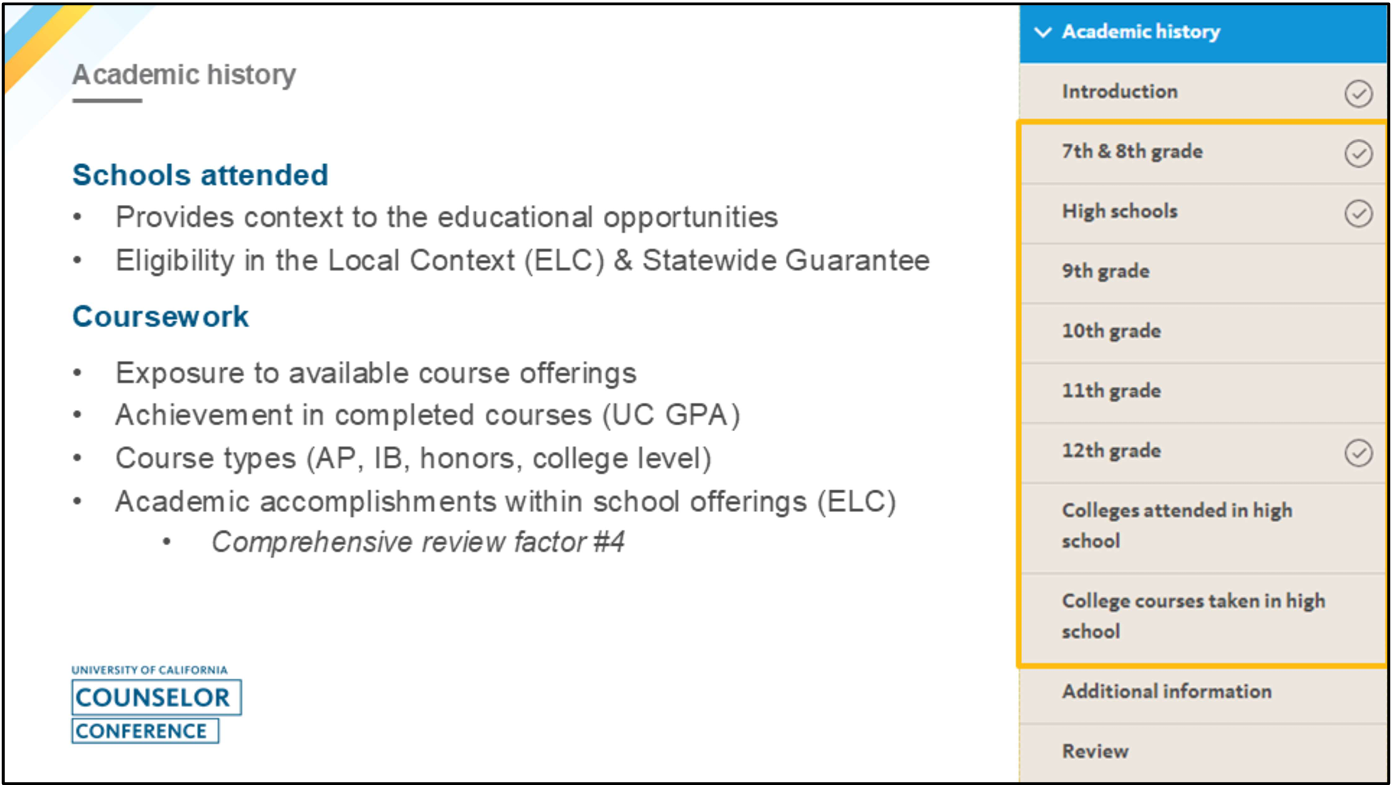
This section requires you to list all your high school courses, grades, and school information to showcase your academic journey.
Admissions officers focus on the following:
Have you made full use of the course resources available at your school (such as AP/IB/Dual Enrollment)?
In what kind of school environment did you achieve these results?
Was the student's academic performance influenced by family or environment?

4. Standardized Tests
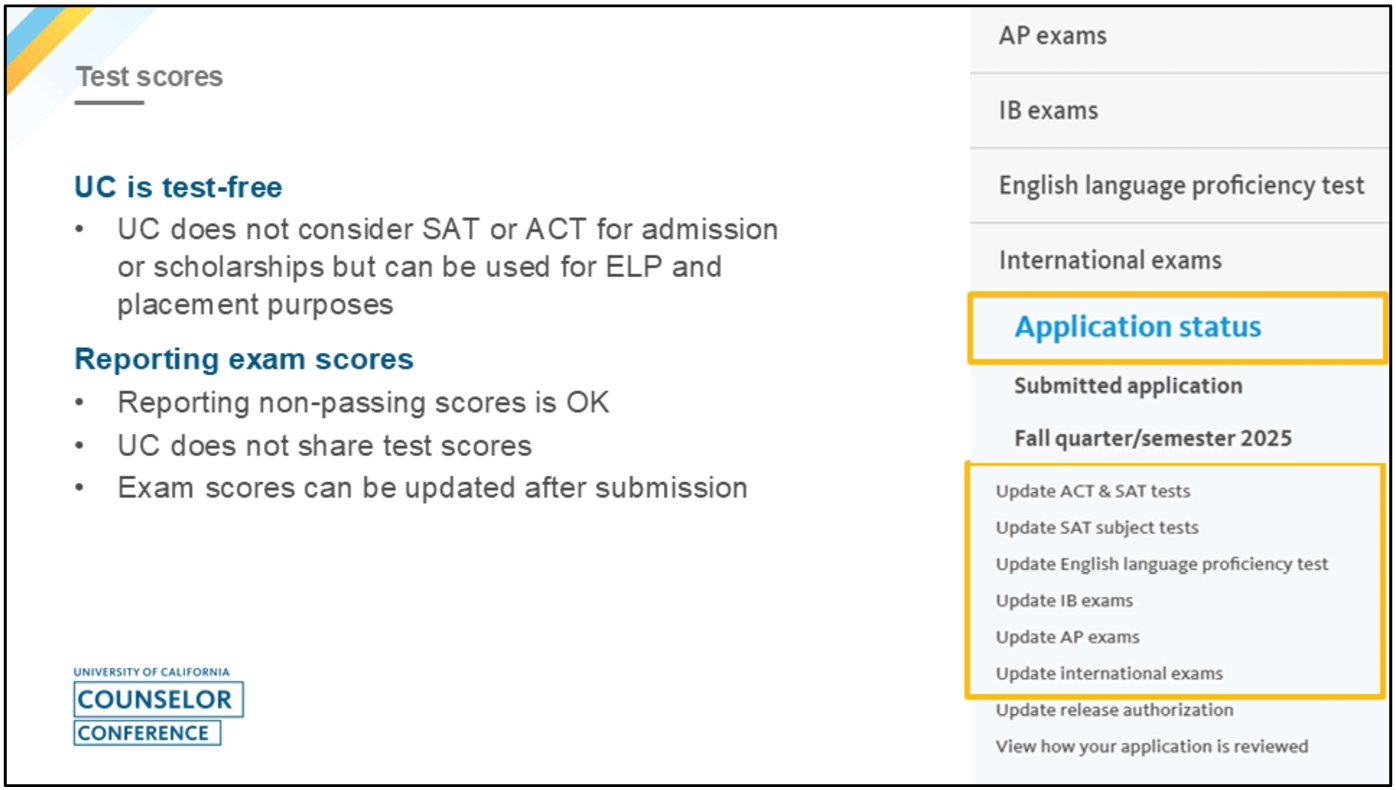
UC has fully implemented a test-free policy, meaning it does not consider SAT/ACT scores for admissions. Test scores are only required in a few cases (such as proof of English proficiency).
Admissions officers focus on the following:
If you submit your exam scores proactively, they will only use them for supplementary information and it will not affect your admission.
Not submitting SAT/ACT scores won't result in a deduction of points; in fact, it will highlight your other strengths.

5. Activities and Awards
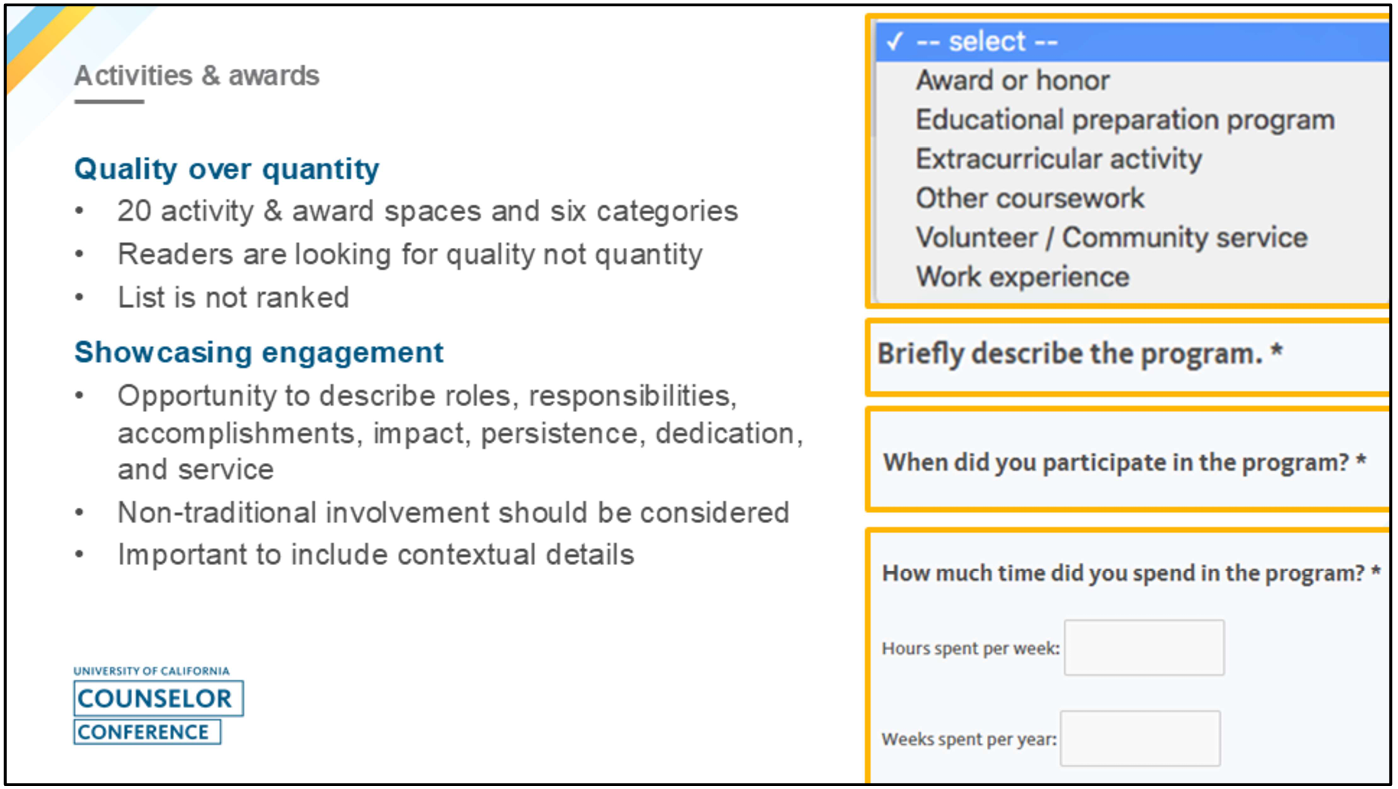
You can fill in up to 20 activities (including clubs, volunteering, part-time jobs, family responsibilities, competitions, etc.) and attach a brief description.
Admissions officers focus on the following:
Does it demonstrate long-term commitment, leadership, or community impact?
Does the activity reflect your developmental trajectory of interests?
Do you have responsibilities in a unique context (such as caring for family members)?

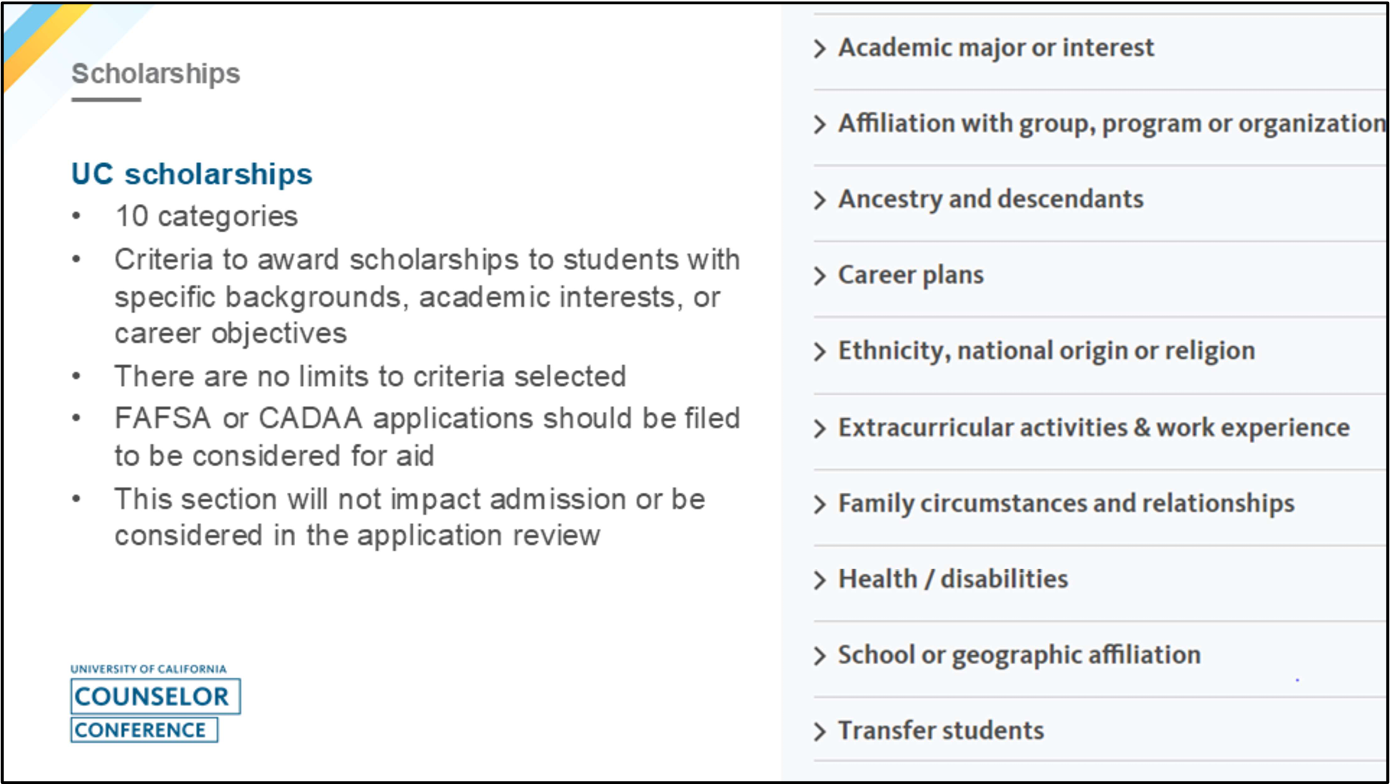
6. Scholarships
This section is not related to admissions and is mainly used to match scholarships and campus support programs, such as EOP (Education Opportunity Program) or Foster Youth Program.

7. Personal Statement
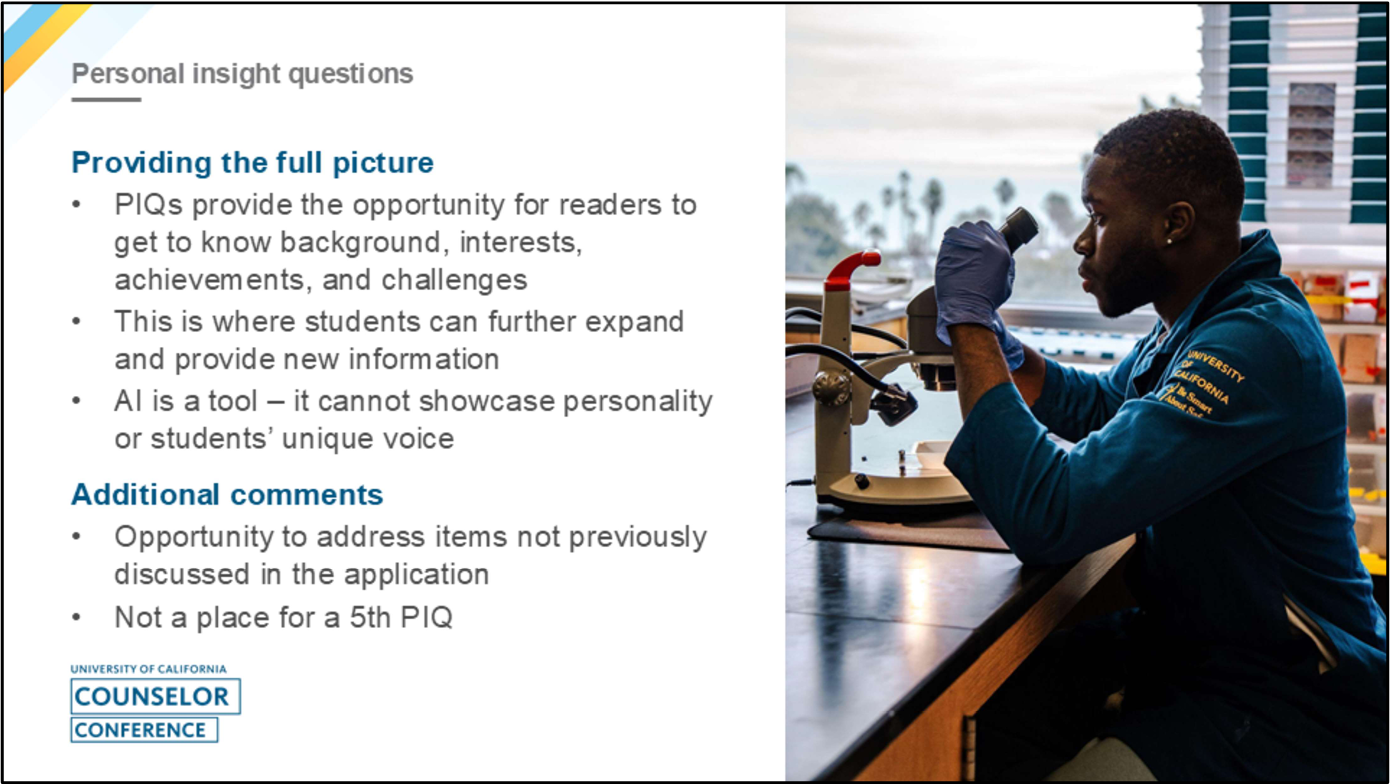
Applicants should choose 4 questions from 8 questions, with a maximum of 350 words per question, to showcase their true personality, growth, and reflections.
Admissions officers focus on the following:
Are you able to learn from and grow from challenges?
Do you have a deep interest in your field of study?
How do you contribute to the community and overcome difficulties?

Wishing all the graduating students of 2026-27 the best of luck!
For more information, please click the following link:
Steven, one of the founders of Hillhouse, introduced...
Hillhouse Grade 12 students' university admissions results in the US, Canada, and the UK
Congratulations to the Hillhouse Student Physics Bowl top 30 winners worldwide!


